
Address
5900 Balcones Drive #29017 Austin, TX, 78731, USA
5900 Balcones Drive #29017 Austin, TX, 78731, USA

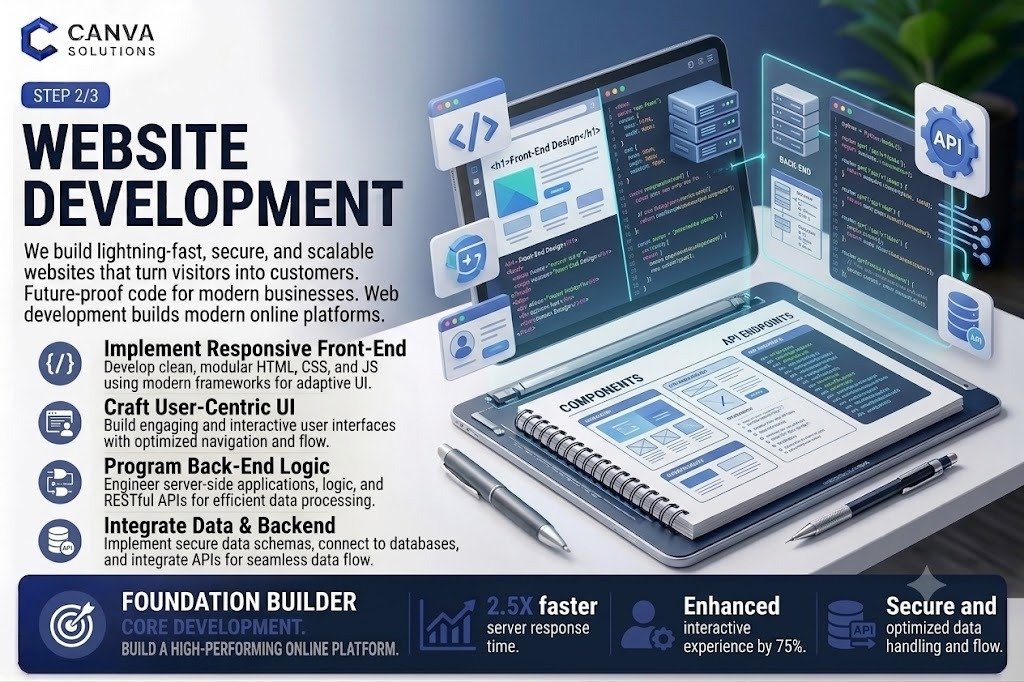
We build lightning-fast, secure, and scalable websites that turn visitors into customers. Future-proof code for modern businesses.
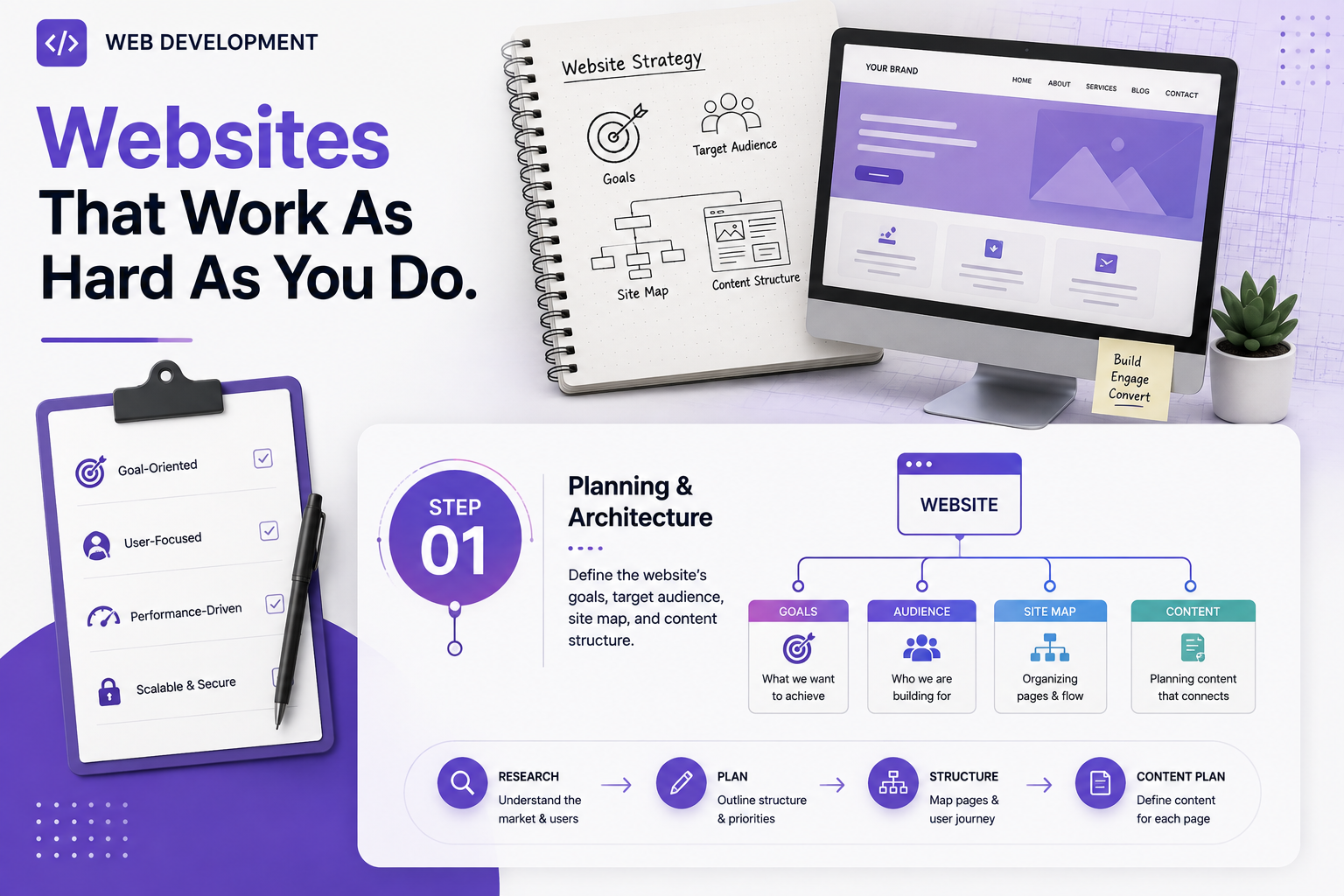
01
Define the website's goals, target audience, site map, and content structure.
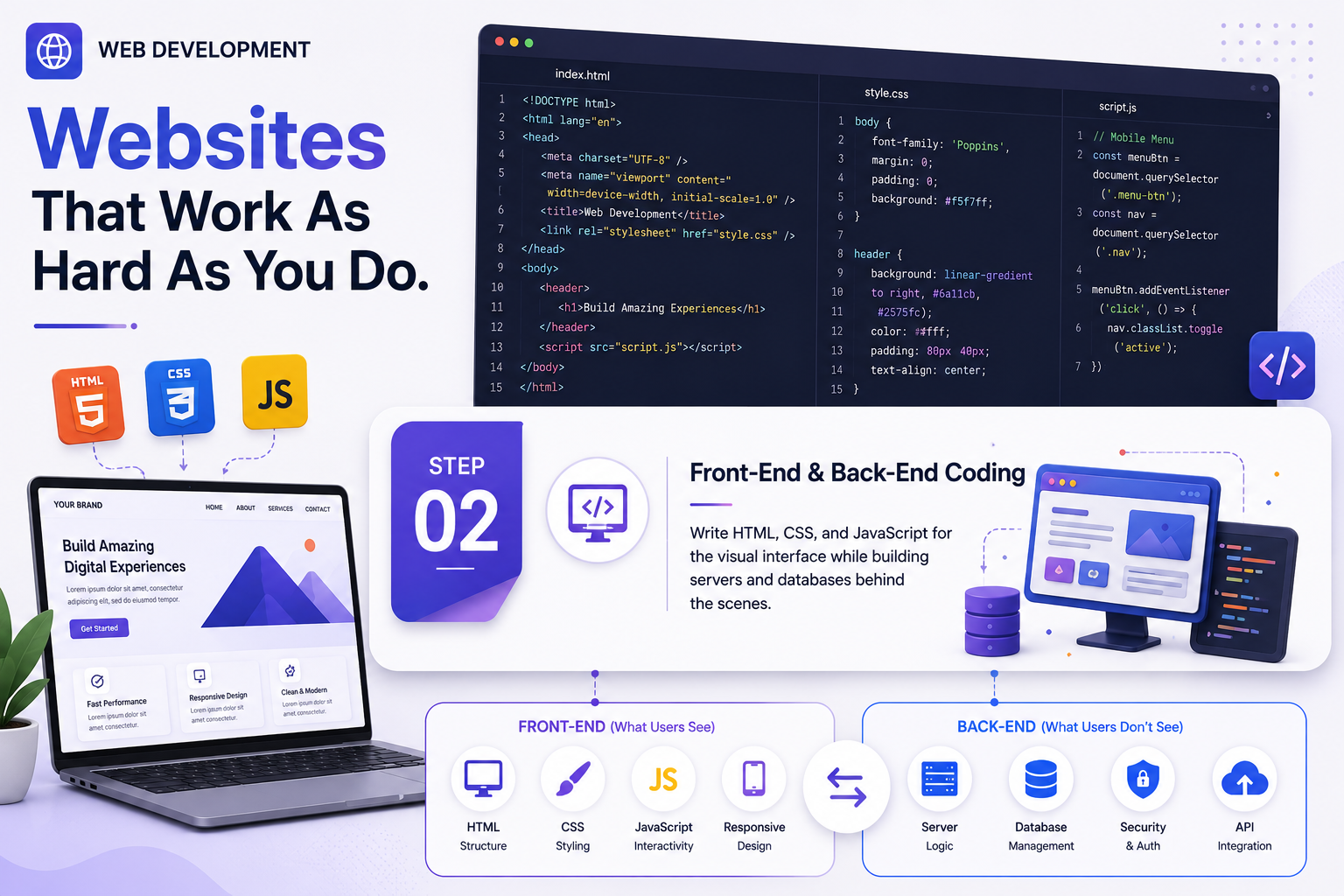
02
Write HTML, CSS, and JavaScript for the visual interface while building servers and databases behind the scenes.
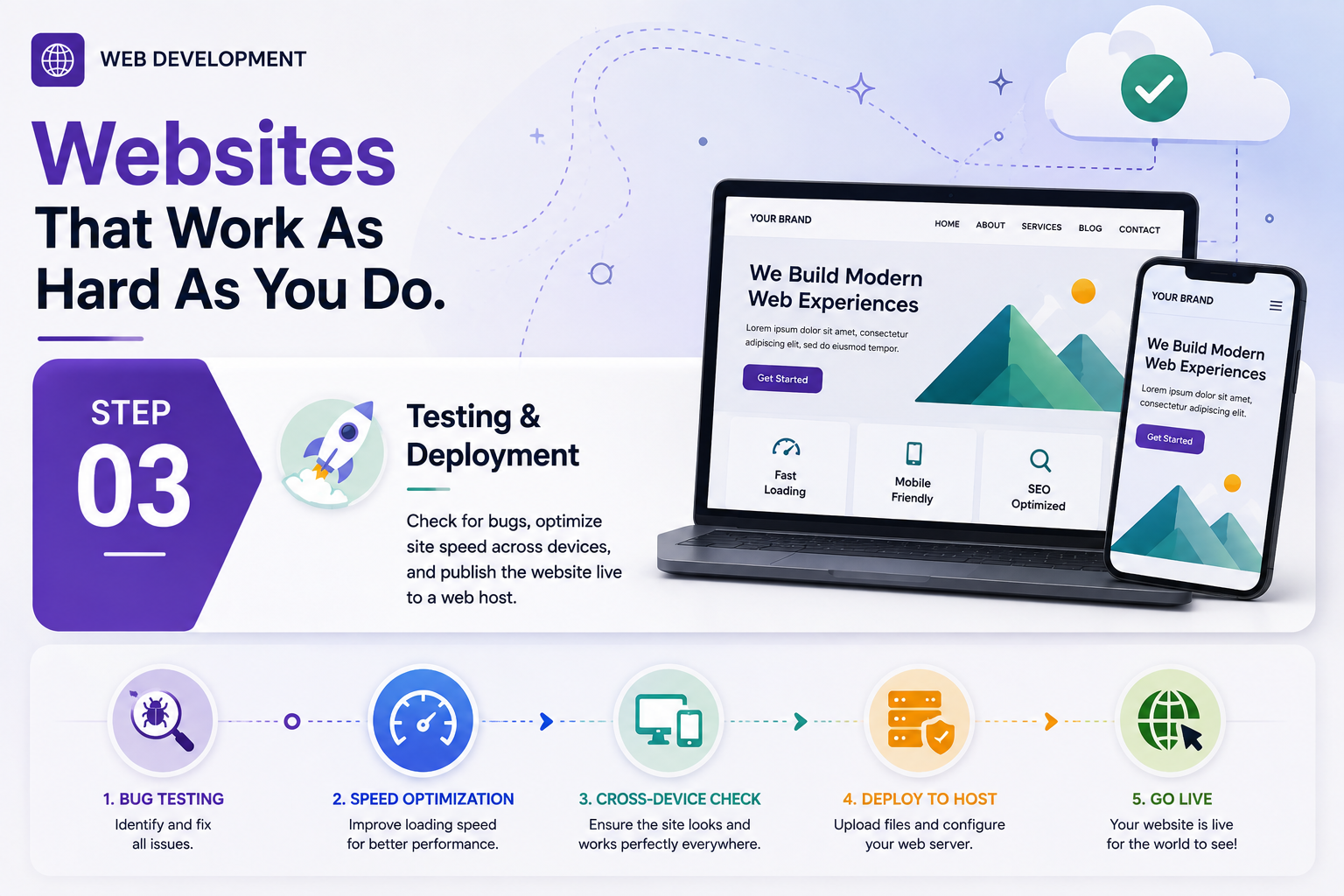
03
Check for bugs, optimize site speed across devices, and publish the website live to a web host.
Whether you need a simple landing page or a complex enterprise platform, we have the architectural expertise to deliver.
Pixel-perfect, responsive websites built from scratch using React and Tailwind CSS. No bloated templates, just pure performance.
Scalable SaaS platforms and complex web applications using the MERN stack (MongoDB, Express, React, Node.js) or Next.js
Seamlessly connect your website to third-party services like Stripe, Google Maps, CRM tools, and custom REST/GraphQL APIs
Websites that behave like mobile apps. Offline capabilities, push notifications, and installable on home screens.
Easy-to-manage content systems using Headless CMS solutions like Strapi, Sanity, or custom WordPress themes.
We optimize code, compress assets, and implement caching to ensure your site loads in under 2 seconds and passes Core Web Vitals.
Responsive design ensures that a website automatically adjusts its layout to fit any screen size, including desktops, tablets, and smartphones. It delivers a smooth browsing experience without forcing users to zoom or scroll horizontally. Moreover, search engines like Google prioritize mobile-friendly websites in search rankings.
Front-end development focuses on the visual aspects of a website that users directly see and interact with, such as layouts, text, and buttons. Back-end development operates behind the scenes, managing the server, database logic, and data processing. Together, both components work side by side to deliver a fully functioning web application.
The front end relies on HTML for page structure, CSS for styling, and JavaScript for interactive features. On the back end, developers use languages like Python, PHP, or Node.js to manage application logic. Database systems using SQL or NoSQL are also used to store and retrieve data securely.
Fast-loading websites reduce bounce rates by keeping visitors engaged instead of leaving due to slow page loads. Search engines favor fast websites because they provide a better user experience for searchers. Techniques like image optimization, browser caching, and clean code directly improve overall site speed.
Canva Solutions © 2026 All Rights Reserved.